Class Projects
A Guide to Scientific Analyses of Ancient Marble
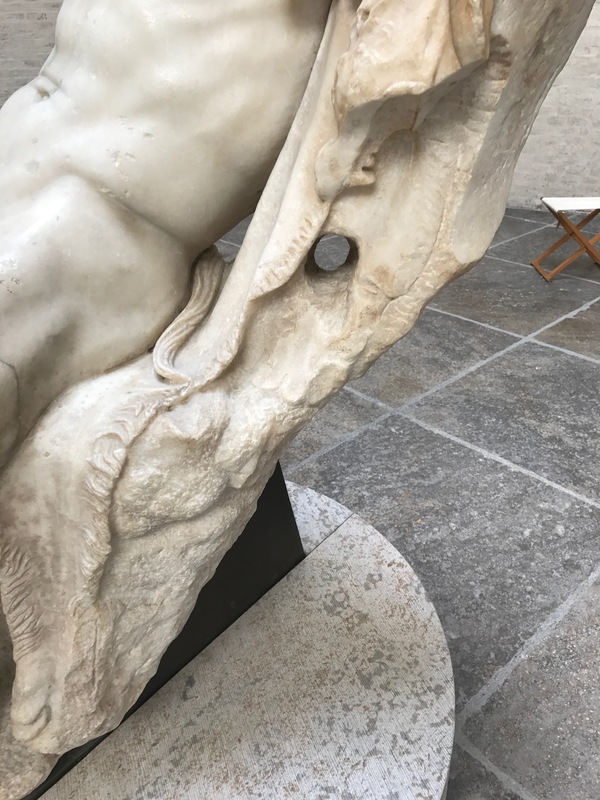
How do museums, archaeologists, and scientists study ancient marble artworks? Why?
This project is an introduction to the questions and methods used to analyze marble, providing an overview of basic scientific concepts and the field of marble provenance studies. It began as an effort to catalogue the scientific analyses of ancient marble sculpture in the Harvard Art Museums' Ancient Department and now forms part of my senior thesis.
Digital Developments in Japan and China in the 21st Century
Introduction
With the popularization of the Internet and mobile electronic devices, the world has entered into the age of digitization. For commoners, a more connected world brings convenience and abundant information. For governments and businesses, on the other side, seizing the opportunities to develop a strong presence in technology can increase both their political and economic power. In 1990, Japan was the world’s second-largest economy and one of the first countries in Asia to popularize the commercial use of the Internet. At that time, China ranked 10th in the world economy but no ordinary household owned a desktop. In 2017, China now takes the place of Japan as the world’s second-largest economy with more than 50% of its population using the Internet on their mobile devices. Meanwhile, Japan steadily ranks top 3 in the world economy in the past three decades. In an increasingly digitized world, technological development has become an important measurement of a country’s…
Public Consumption of Disability: UN Postwar Photography and Film
This is an ongoing digital history project that seeks to explore the perception of disability in the global imagination, informed and reinforced by the images and tropes of postwar humanitarian photography. This project looks at the United Nations' vast archives of photographs, films, posters, and other visual sources disseminated to the general public for consumption. Using data from the UN and World Health Organization's audiovisual archives, this project aims to map location, photographer, period, and the language used in accompanying photo captions to help contextualizethe postwar construction of “the disabled.”
A version of this project will be presented through the Center for History and Economics.
This site primarily showcases the digital methodology and dataset in an interactive visual format that supports the historical narrative presented on the UN History website.